How technology turns a simple box into an interactive puzzle
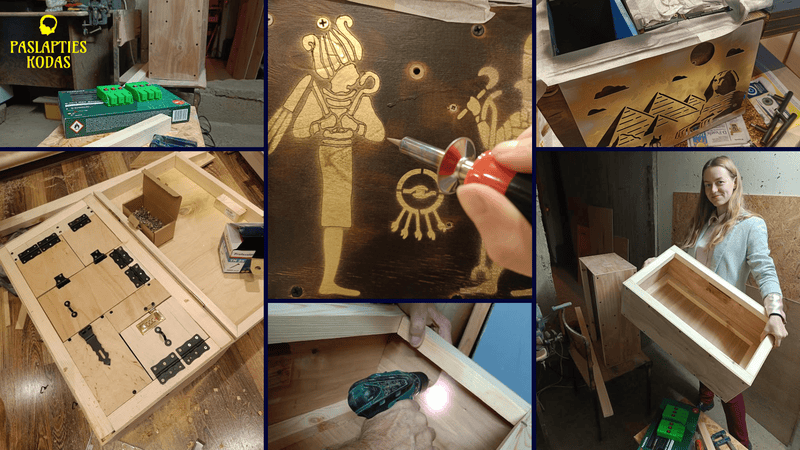
A wooden box can be much more than a container. With carefully designed mechanisms, electronic components, hidden compartments, and a logical sequence of challenges, it can become an interactive puzzle that encourages players to think, experiment, and solve problems. These creations combine physical engineering with game design, transforming an ordinary object into an immersive experience.
Interactive puzzle boxes are also an interesting example of how technology can be used beyond screens and digital interfaces. Instead of clicking buttons or following instructions on a display, players interact directly with physical objects, discover hidden clues, and trigger mechanisms through their actions.
What makes an interactive puzzle box work?
An interactive puzzle box is designed around a series of connected challenges. Each solved puzzle provides information, reveals a hidden element, or allows the player to progress to the next stage.
Depending on the design, a box may combine several technologies and mechanical elements:
- Mechanical locks and hidden compartments that keep certain sections inaccessible until the correct action is performed.
- Magnetic mechanisms that allow components to activate or move without obvious external controls.
- Electromagnetic mechanisms that can control access to selected compartments or trigger specific stages of a puzzle.
- Electronic components that coordinate selected interactions and help connect different stages of the experience.
- Light-based clues that direct attention to particular symbols or details after a challenge has been solved.
The important part is not simply including as many components as possible. Each mechanism must serve a purpose within the overall puzzle. Technology becomes meaningful when it helps create a logical connection between the player’s actions and the results.
The engineering behind the box
Creating an interactive puzzle box starts long before the first mechanism is installed. The physical structure must accommodate all the components while remaining stable, durable, and practical to use.
Designing the structure
The wooden frame provides the foundation for the entire experience. Its dimensions, internal compartments, and construction must be planned around the mechanisms that will be installed inside.
Technical drawings help determine where each component belongs and how the different sections fit together. If a compartment is too small or a moving part lacks sufficient clearance, the mechanism may not operate reliably.
This is why construction accuracy matters just as much as the electronic elements. Even a clever puzzle concept can fail if the physical structure does not support it.
Integrating mechanical and electronic components
Once the frame is ready, the internal mechanisms can be installed. Magnetic locks, electromagnetic components, and other electronic elements may be used to control how the box responds to specific actions.
For example, solving a puzzle might reveal a hidden compartment, while completing another challenge could activate a light that highlights a particular symbol. These interactions make the box feel responsive rather than static.
The design also requires careful coordination between the physical and logical parts of the system. A mechanism must be positioned correctly, its operation must match the intended solution, and the player must be able to understand the feedback provided by the box.
Connecting puzzles into a logical sequence
A good interactive puzzle is not just a collection of unrelated riddles. Its challenges form a sequence in which information discovered in one stage helps players progress through the next.
Designers must consider what players can see, which clues they can access, and how each action changes the state of the puzzle. If a clue appears too early, the challenge may become too easy. If a required connection is too obscure, players may become frustrated.
This balance between difficulty and clarity is one of the most demanding aspects of puzzle design. The goal is to encourage experimentation without making the solution feel arbitrary.
Why testing is essential
Even a well-designed mechanism can behave differently once the complete box is assembled. Components may interfere with one another, moving parts may require adjustment, and a puzzle sequence may not work as intended during actual gameplay.
Testing should therefore take place at several levels.
First, each lock and mechanism should be checked individually. Next, the complete system should be tested to confirm that the components work together. Finally, the entire puzzle sequence should be played through from beginning to end.
This process helps identify unreliable interactions, confusing clues, and potential points where players might get stuck for reasons unrelated to the intended challenge.
For puzzle boxes intended for repeated use at events, educational activities, or team-building sessions, reliability is particularly important. The experience should remain consistent even after multiple rounds of play.
Combining technology with visual design
Technology creates the interactions, but visual design gives the puzzle its atmosphere. Wood, engraved symbols, decorative patterns, colours, and surface finishes can help establish a theme before players even begin solving the first clue.
For example, an ancient Egyptian theme can incorporate hieroglyphs, weathered surfaces, and symbolic markings. These visual elements make the box feel like an object from a particular world rather than a collection of mechanical components.
The most effective designs connect appearance with gameplay. A symbol should not only look interesting but may also provide a clue, identify a location, or help players recognise a pattern.
When visual details and functional mechanisms support the same concept, the result feels more cohesive and immersive.
From a prototype to a finished puzzle box
Turning a concept into a finished product requires several disciplines to work together: design, woodworking, mechanical construction, electronics, puzzle development, and testing.
This approach is used in the creation of custom puzzle boxes by Paslapties Kodas, a Lithuanian team that designs and builds interactive puzzle boxes by hand. Its Secrets of Egypt concept combines a wooden structure, hidden mechanisms, electromagnetic components, light-based clues, and a themed puzzle sequence.
The boxes can also be adapted for business events, educational activities, promotional campaigns, and rental services. Depending on the project, visual elements such as colours, decorative details, and company logos can be modified, while puzzle tasks may be adjusted by agreement.
This illustrates how interactive puzzle design can move beyond a hobby project and become a practical format for creating engaging activities in different settings.
Why physical interactive puzzles still matter
Digital games offer complex simulations and limitless virtual environments, but physical puzzle boxes provide a different kind of interaction. Players can touch the materials, examine real objects, manipulate mechanisms, and observe immediate physical results.
This hands-on approach encourages careful observation, logical reasoning, experimentation, and collaboration. It also creates a shared experience in which players can discuss clues and test ideas together.
Ultimately, the technology behind an interactive puzzle box is most successful when players focus on the mystery rather than the machinery. A carefully engineered structure, reliable mechanisms, clear puzzle logic, and thoughtful visual design can turn a simple wooden box into an engaging experience that combines technology with human curiosity.
Related Posts